
Client onboarding risks are underestimated. They silently cap growth and retention.
Onboarding is where sales promises are validated, trust is formed, and time-to-value is either accelerated or lost. Most risks remain invisible until value is already at risk.

Why onboarding is a high-risk phase
Client onboarding concentrates operational, technical, and organizational risk because:

Sales promises are validated for the first time in daily operations

Data migration, enablement, and customer availability converge under real deadlines

Early experiences set long-term trust, adoption, and retention outcomes
Takeaway: Onboarding is the point where growth and retention risks first materialize.
Onboarding issues compound over time and get harder to fix
What looks like an execution problem early becomes structural debt later — increasing effort, support load, and churn risk:
The later issues are addressed, the higher the cost — and the lower the leverage.
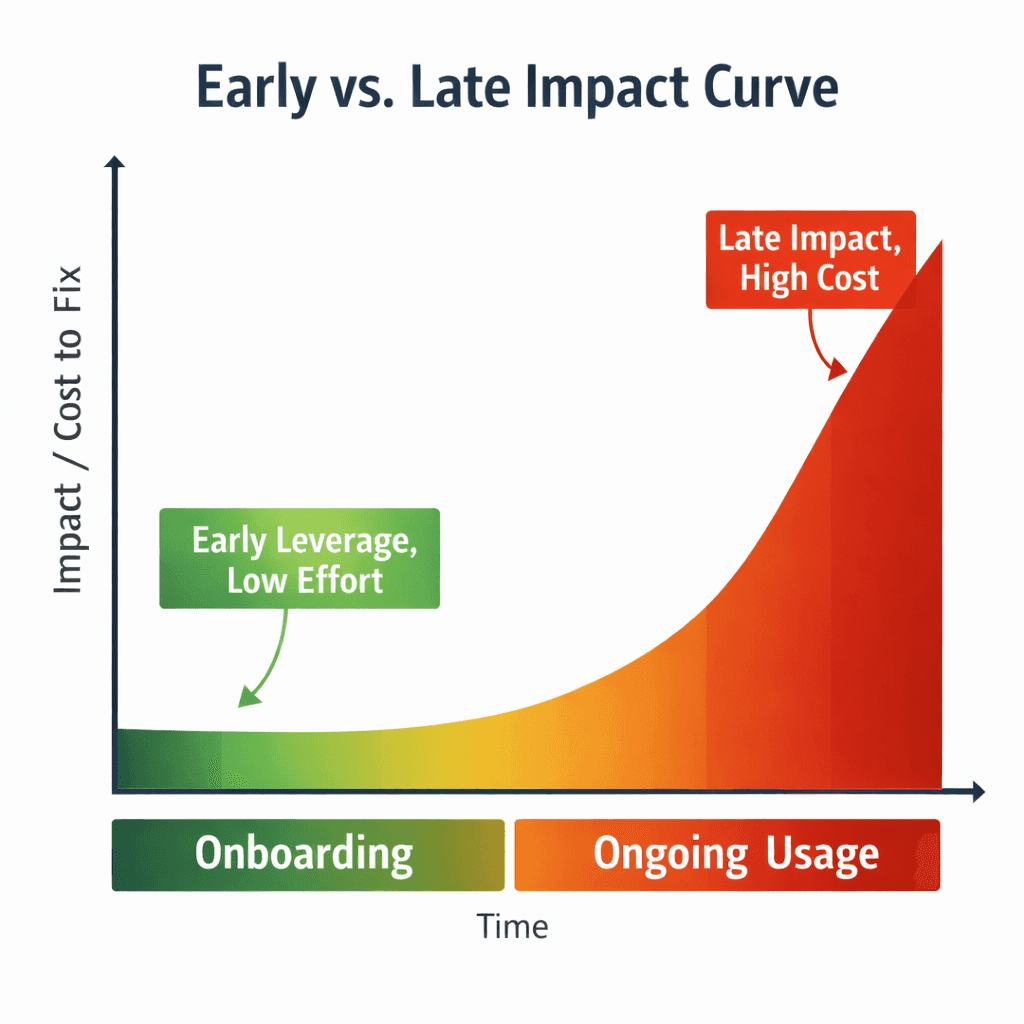
Onboarding value is lost through predictable risk patterns — not isolated execution mistakes

Customer engagement stalls progress and delays critical feedback

Expectation gaps create friction and rework across teams

Data quality issues break trust early and trigger costly remediation

Weak enablement shifts effort to manual support and increases churn risk

The question of leadership to answer early
Are we treating onboarding as a growth and retention lever — or as a delivery task?
The biggest onboarding risks are structural: ownership, prioritization, data readiness, and customer engagement. Without end-to-end visibility, leadership sees symptoms late — delays, escalations, support load, and churn.
High-performing teams treat onboarding as a managed system
Teams that scale onboarding reliably don’t improvise. They put structure around it. They:
The gap is rarely effort — it’s structure and leadership attention.

The 10 Client Onboarding Risks Every Executive Should Know
A structured, executive-level overview of the risks that delay time-to-value, reduce onboarding throughput, and increase churn.
Clear, practical, and jargon-free — focused on management, data migration, and enablement & support.
The 10 Client Onboarding Risks Every Executive Should Know
Download the executive brief on the structural onboarding risks that delay value realization.
Designed for leadership teams: clear, concise, and focused on growth and retention impact.