🧱
You only maintain the differences
Platform and configuration stay separate. What you adjusted is yours to look after, everything else stays standard and keeps getting updates.



Customisation is where platform businesses quietly lose their margin. These three things decide whether it does.
Platform and configuration stay separate. What you adjusted is yours to look after, everything else stays standard and keeps getting updates.
What one customer needs differently is configured, so the answer is rarely 'next release'.
Your domain, your logo, your colours. The customer never learns that we exist.
From signal to outcome in four explicit steps, with no hidden hand-offs.
A new customer gets the standard solution, which is also the one that has already been proven everywhere else.
Screens, fields, steps and permissions are adjusted for that customer, without a separate version of the product being created for them.
Our target API adapts to your system rather than the other way round, so you change nothing on your side to make it fit.
Domain, logo and colours are yours, and the customer sees your product from the first email onwards.
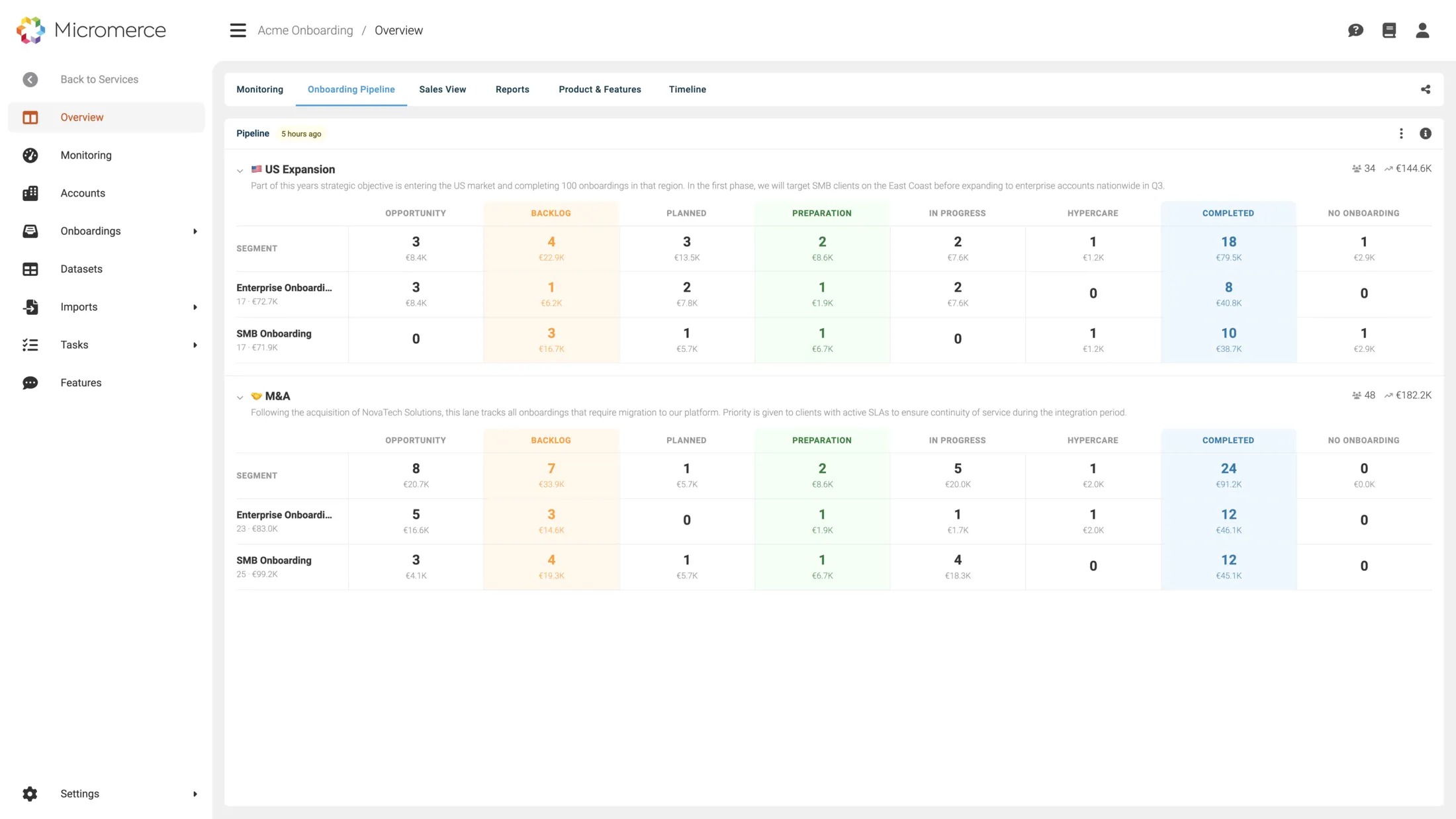
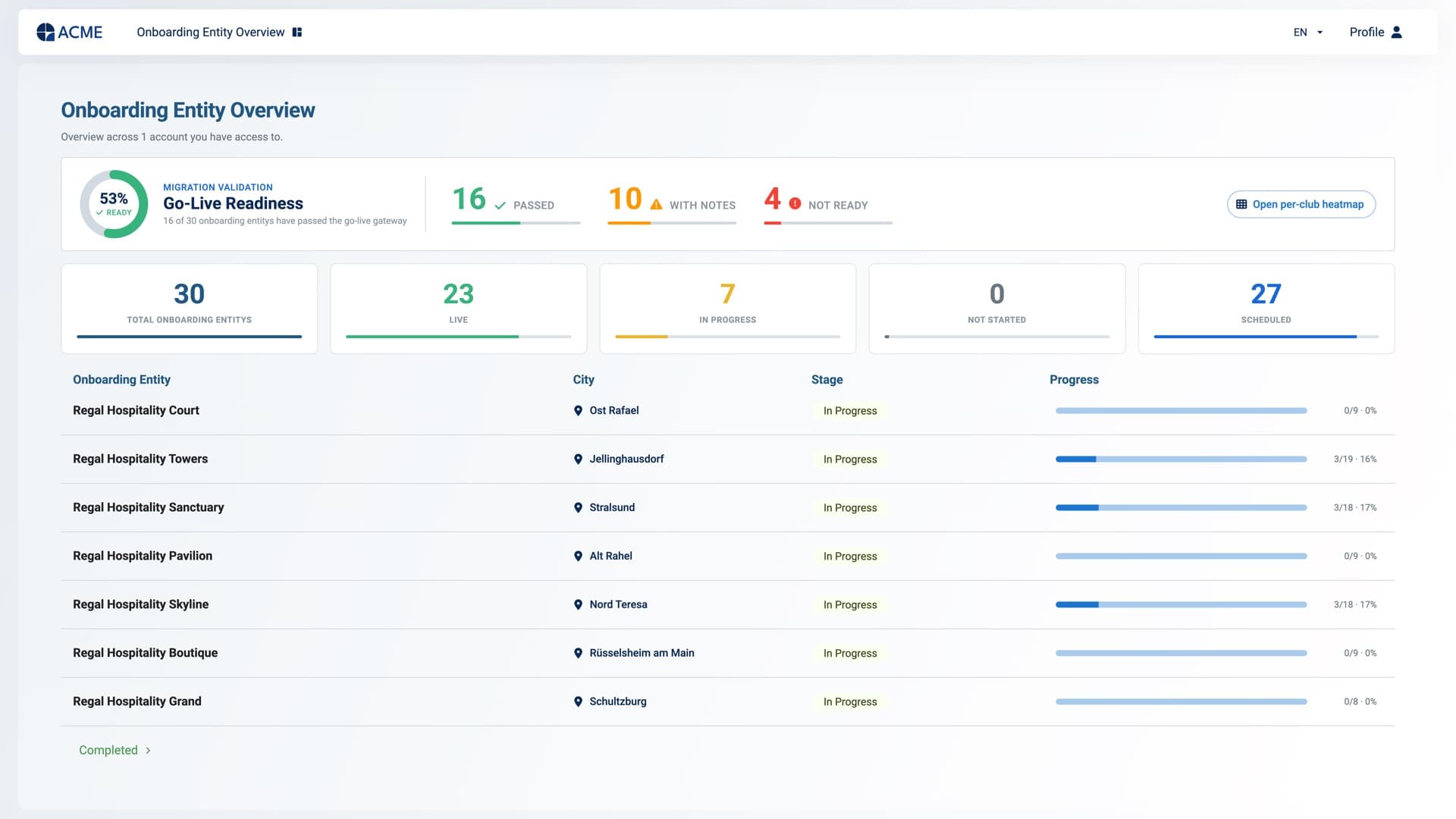
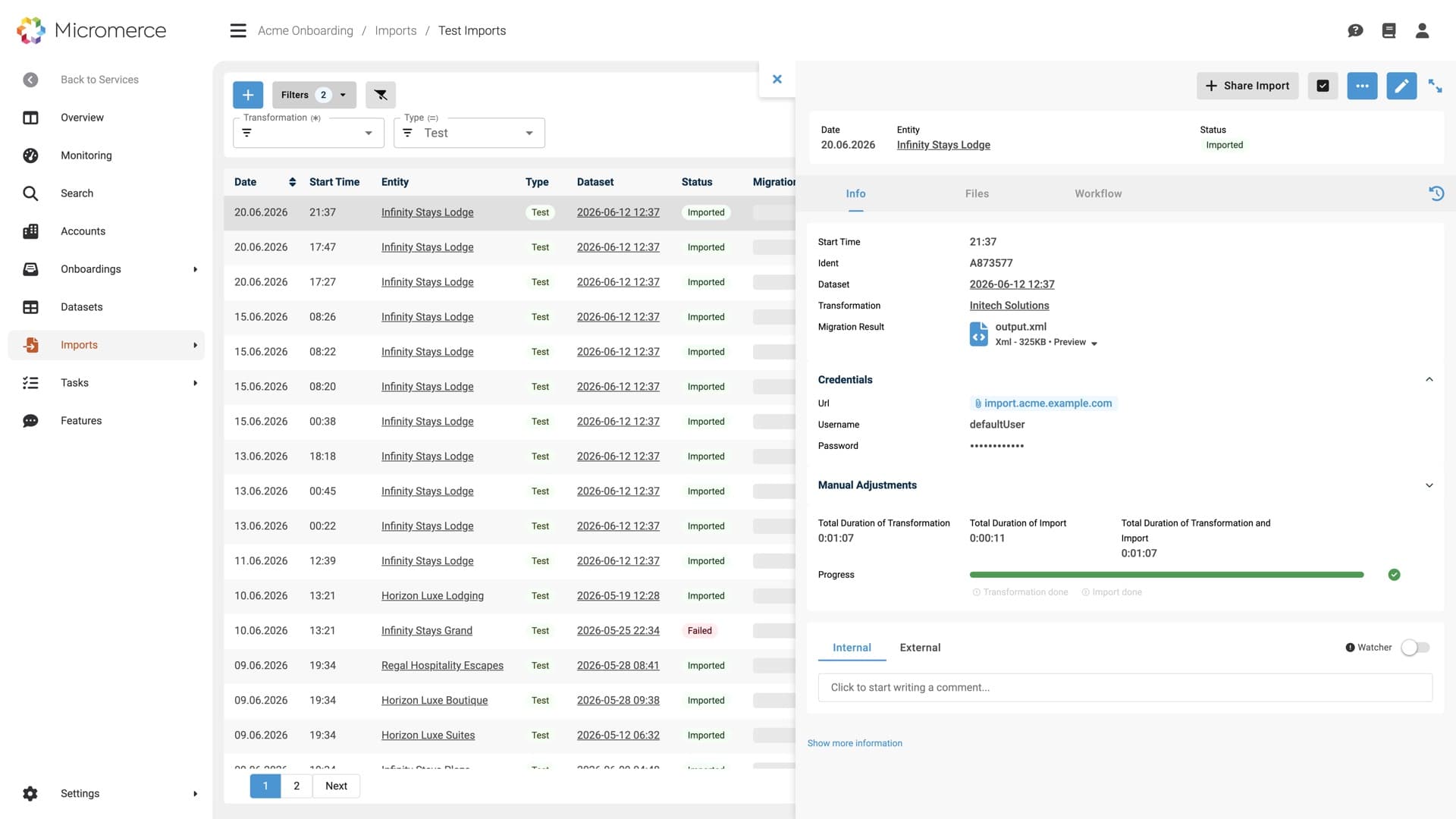
Every headline backed by a concrete workflow. Screenshots show what your team will actually use.
A new customer starts on the standard solution. What they need differently is configured on top, and because the two stay separate, the standard underneath keeps updating while only the adjustments belong to that customer.
Your own system sets the terms. Our target API adapts to it, so you do not rebuild anything on your side to make the two work together. Extending what gets written across stays a setting rather than a project.
30-minute call. Tell us what your customers ask for that your current tool cannot do, and we show you where it would sit.
Who may see and do what is decided once, and it covers your team as well as the AI tools they use. Not two lists of permissions that quietly drift apart.
Screens, forms, fields and where each of them appears. If one customer needs one more field in one place, that is an adjustment and not a development ticket.
Your subdomain, your logo, your colours, or a domain of your own. The customer sees your brand from the first email to the last screen and never learns ours.
Anonymised from our customer base. See whether one of them is yours.
The same product serves two customer groups whose requirements barely overlap, and every release turns into a compromise between them.
Each group runs its own configuration on the same platform, so a change for one stops being a risk for the other.
A large account makes a request that would normally end up on a roadmap and stay there for two quarters.
In most cases it is configured for that account within the standard, and the roadmap stays free for what the product actually needs.
Implementation partners want to sell the platform as part of their own offering, not as somebody else's tool.
Each partner gets their own branded environment, so their customers see one product rather than a chain of vendors.
Three ways customisation usually turns into a liability.
Other parts of the platform you'll use alongside this.
No. Every customer runs on the standard platform, and what they need differently is configured on top of it. There is no separate version of the product for anyone.
That is the normal case. Our target API adapts to your system, so the fit is made on our side rather than by rebuilding anything on yours.
We do, together with you. Most adjustments are a matter of hours rather than a development cycle, and they are recorded so you can see what was changed and why.
Yes. Each partner gets their own branded environment, with their domain and their look, so their customers see one product.
30-minute call. Bring an onboarding you are running today, we show you where the time goes.

We use cookies!