🔍
No feature workshops
What a customer uses comes out of their data, including what they forgot to mention.



What you get out of the box. No premium tier.
What a customer uses comes out of their data, including what they forgot to mention.
Every gap carries the onboardings it blocks and the MRR behind them. The build order argues itself.
Dates slip, usage findings change. The plan re-sorts instead of going stale in a spreadsheet.
From signal to outcome in four explicit steps, with no hidden hand-offs.
Planned features, dates and status flow in from Jira, ProductBoard or Linear. Your product team keeps planning where it already plans.
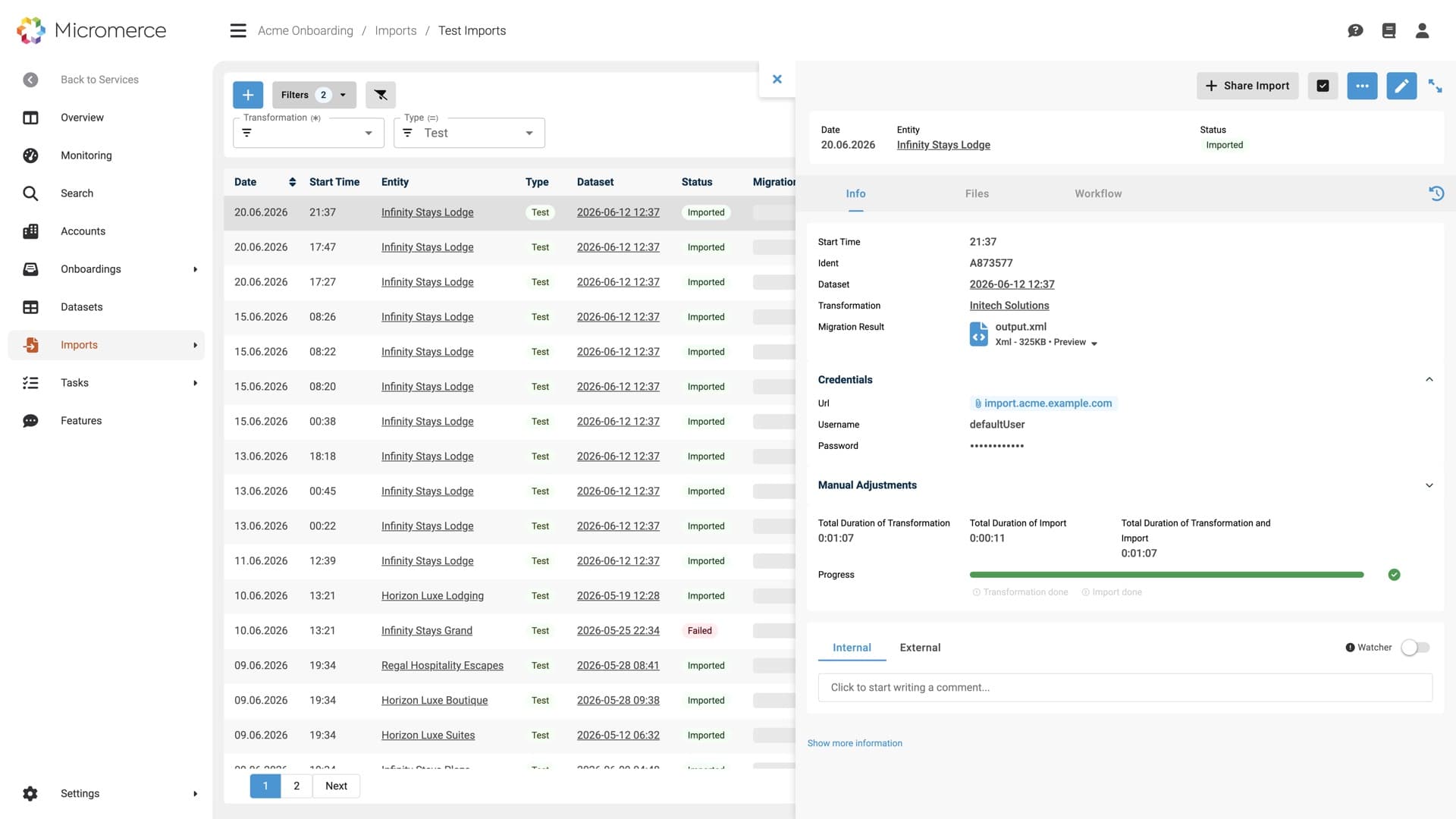
Per source system: which data pattern means which feature. Set up once, used by every customer after that.
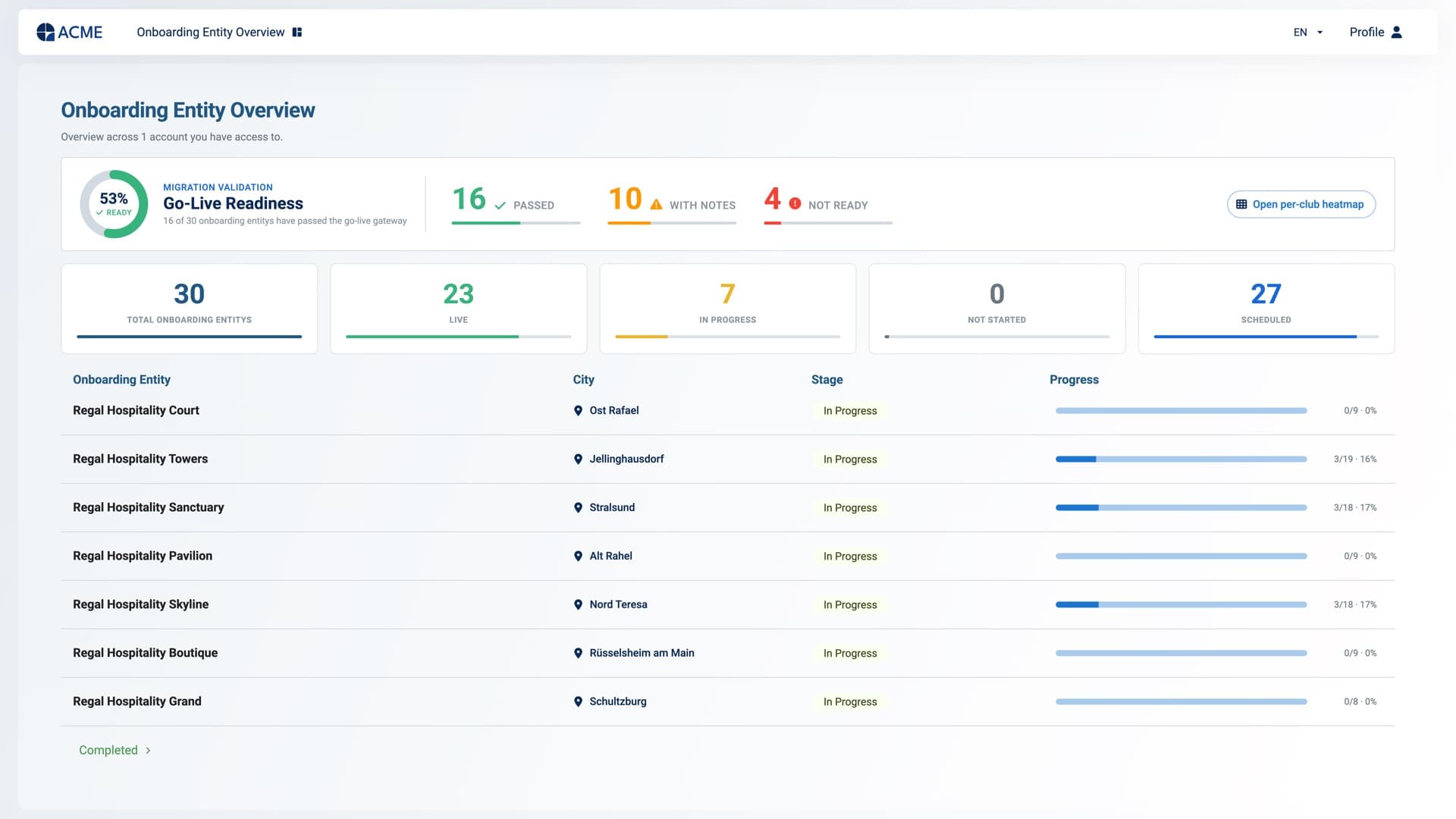
Each migration dataset is evaluated against the rules. Blocked and ready customers separate themselves.
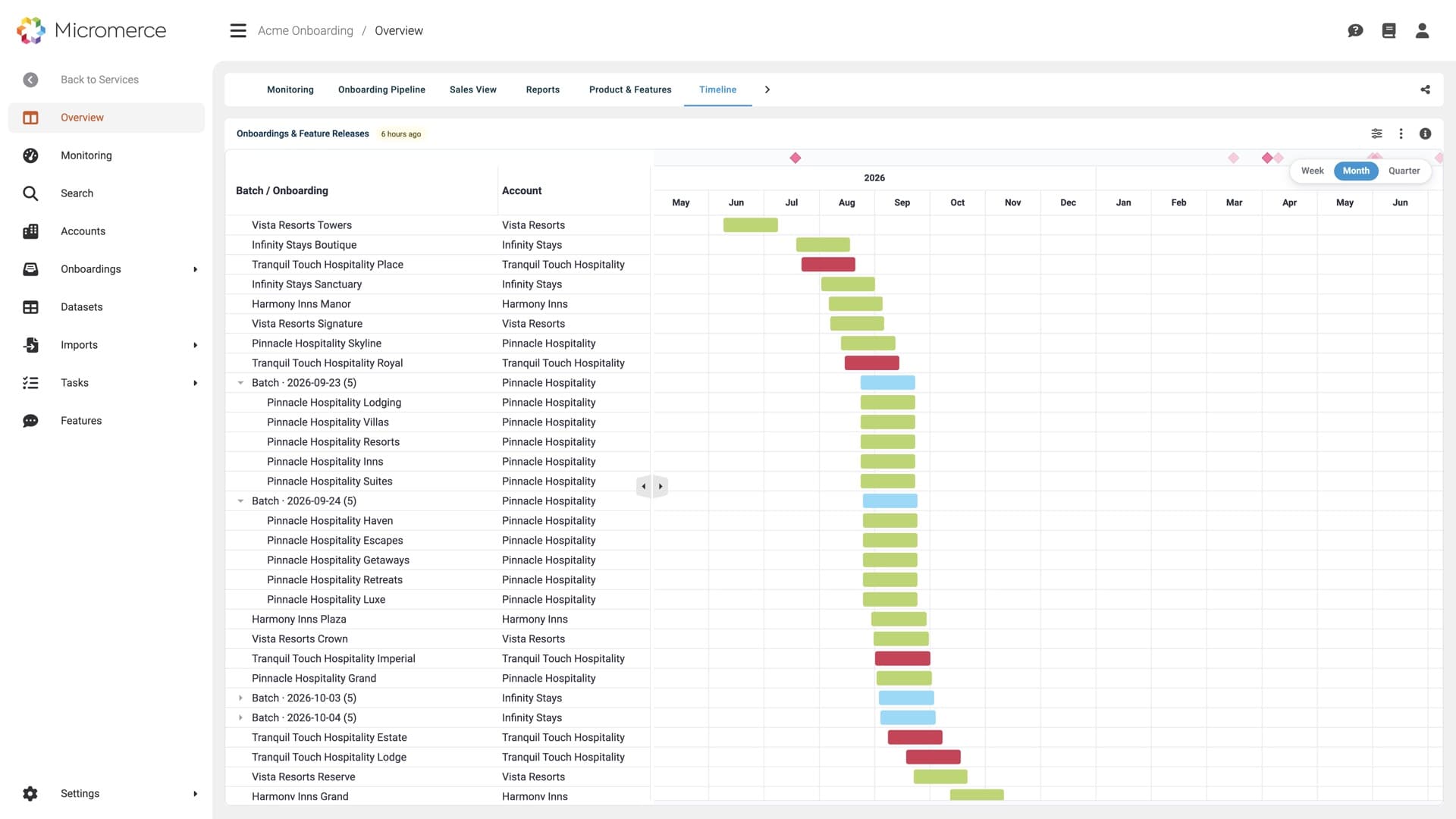
Per feature: affected onboardings and blocked MRR. Per customer: blocked or ready to start. On the timeline: where a delay collides with a planned start.
Every headline backed by a concrete workflow. Screenshots show what your team will actually use.
Define once per source system which data pattern means which feature. Every customer dataset you load is then evaluated against it, including the features nobody mentioned in the kick-off.
Planned features, dates and status flow in from whichever tool your product team runs: Jira, ProductBoard or Linear. Each one carries the onboardings it holds up and the revenue behind them — in the same record your product team already works in.
One list, sorted by what each gap costs. Which feature unlocks the most customers, which one can wait, which one nobody actually uses. The argument between product and delivery settles itself.
A release date moves, or a new dataset shows a customer uses something else. Affected onboardings and start dates move with it, and the timeline flags the collisions instead of hiding them.
Feature status at a glance, the features holding up the most revenue, and how migrated MRR develops over time. Financial forecasting and capacity planning off the same data the delivery team works in — not off a slide someone assembled the night before.
Anonymised from our customer base. See whether one of them is yours.
Platform acquired, dozens of customers to move, and no defensible answer to 'who can we start with?'
Blocked and ready customers separated by their own data. The first wave started without waiting for the full feature set.
Build order argued from opinion; every slipped release date meant reshuffling the plan by hand.
One list sorted by blocked revenue that re-sorts itself whenever a date moves or a dataset lands.
The transformation has to pay off, and the picture of it comes from status calls rather than from data.
One overview of what is blocked, what it costs, and where the next engineering euro unlocks the most migrated revenue.
The three most common alternatives our customers come from.
Other parts of the platform you'll use alongside this.
A feature a customer uses in the source system that the target does not have yet: missing entirely, only partly equivalent, or the same name with a different meaning. It is detected from that customer's data, not from a list someone typed up.
From the migration data. Once per source system you define which data pattern indicates which feature. After that every dataset you load is evaluated automatically — the effort is spent once, not per customer.
No, it reads from it. Your product team keeps planning where it plans. The platform adds what your roadmap tool cannot know: which customers and how much revenue hang on each item.
You need access to source data. As soon as an export exists, detection runs against it. The earlier that happens, the more the scope of work rests on evidence instead of estimates.
30-minute call. Bring an onboarding you are running today, we show you where the time goes.

We use cookies!